

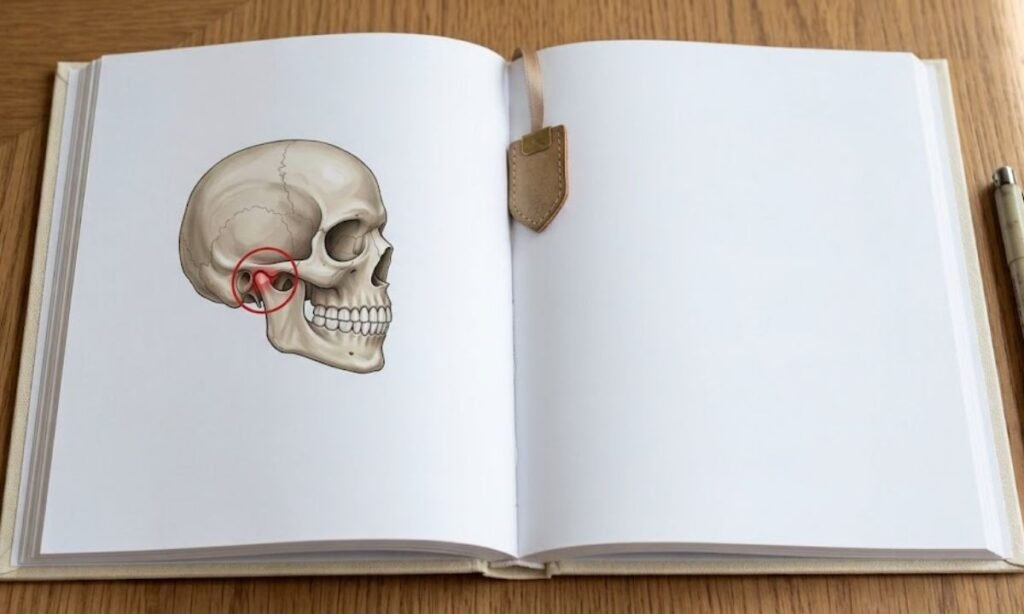
Someone texts, “My TMJ is killing me today,” and you’re not sure whether to send sympathy or Google it.
The TMJ meaning in text is simpler than most people expect. TMJ in text usually means temporomandibular joint, the joint that connects your jaw to your skull.
People use it as shorthand for jaw pain, clicking, or tightness. Once you know this TMJ meaning in text, most chats about jaw pain make sense right away.
This guide covers what it means, where it comes from, how to reply, and the other meaning you might run into.
💬 What Does TMJ Mean in Text? – Quick Meaning
✅ Simple Definition
TMJ stands for temporomandibular joint. In everyday chat, it’s slang for jaw trouble, such as pain, popping, stiffness, or clenching. Strictly, the joint is TMJ and the problem is TMD (temporomandibular disorder). Most people just say “I have TMJ.”
💡 Quick Examples
- “Ugh, my TMJ is flaring up again.”
- “Stress clenching = TMJ by Friday.”
- “Can’t eat the bagel, TMJ said no.”
📌 Quick Facts
| Feature | Detail |
| Full form | Temporomandibular Joint |
| Common slang meaning | Jaw pain or jaw problems |
| Tone | Casual, complaining, sometimes humorous |
| Typical platforms | WhatsApp, Instagram, TikTok, text messages |
| Other meaning | “Tamo junto” (Portuguese: “we’re together”) |
| Is it a diagnosis? | Not in a text, only a casual label |
📚 Origin & Background
The TMJ meaning in text starts in anatomy, not internet culture. The slang borrowed the abbreviation from the medical world and reshaped it for everyday chat.
🏥 Medical History
The term comes from anatomy. “Temporo” refers to the temporal bone near your ear, and “mandibular” refers to the lower jaw. Doctors and dentists have used the abbreviation for decades. Over time, patients started saying “I have TMJ” when they meant the disorder, and that habit spread into everyday speech.
🌐 Cultural & Internet Influence
Health slang spreads quickly online. People share jaw tension, night grinding, and stress habits in memes and short videos. Dictionaries now list “TMJ” as a colloquial word for jaw pain. In Brazil, the same three letters mean something different: “tamo junto,” a friendly way of saying “I’ve got you.”
📈 Is TMJ Still Popular? Trends & Online Usage
Yes, and it keeps growing for a few reasons:
- More people openly discuss stress and anxiety.
- Jaw-clenching content circulates widely on short-video apps.
- Remote work and screen time have made jaw tension more noticeable.
It isn’t trending like a meme, but it’s a steady, relatable term. It tends to come up when people talk about stress, sleep, or chewing gum.
🗨️ Real-Life Conversations
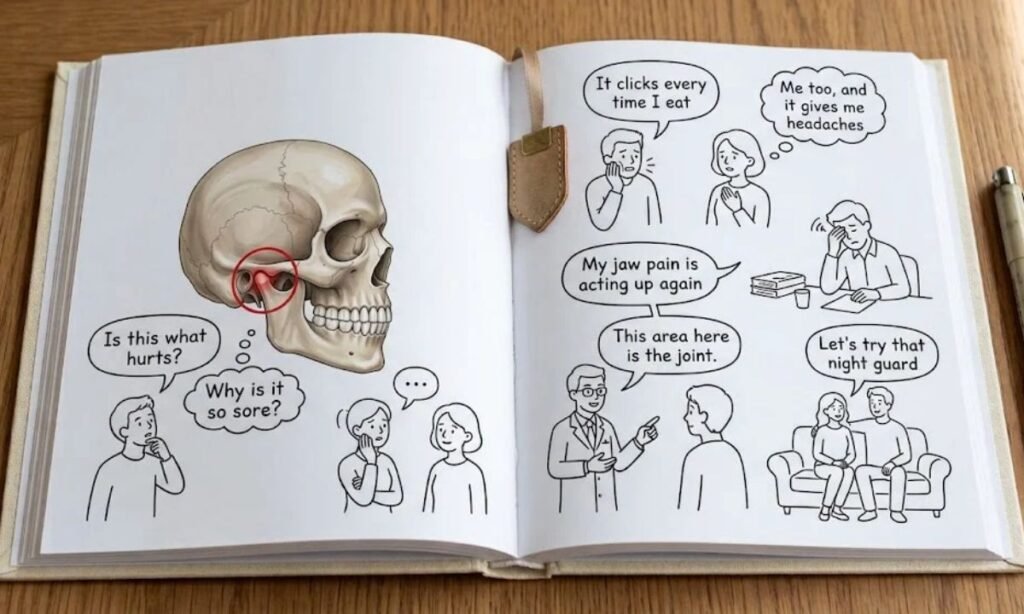
Seeing the TMJ meaning in text in action makes it much easier to understand. Here are four realistic chats showing how people actually use it, from sympathy to jokes to stress venting.
📱 WhatsApp Chat
Emily: Why are you so quiet today?
David: My TMJ is acting up. Even talking hurts 😩
Emily: Take it easy. Soft food only!
📸 Instagram DMs
Maya: Your story about the dentist, what happened?
Zoe: Told me I clench at night. Basically my TMJ is stress-powered.
Maya: Same, mine clicks every time I yawn 😭
🎵 TikTok Comments
@jawtired: POV: you wake up and your TMJ already hurts
@calmdaily: Mouth guard changed my life, trust me
@nightowl_22: Me clenching during every deadline 🙃
💌 Text Messages
Dan: Skipping steak tonight. TMJ.
Lili: Oh no, is it the clicking again?
Dan: Yep. Soup it is.
🧠 Emotional & Psychological Meaning
The TMJ meaning in text isn’t only about a sore jaw. For many people, it’s a quiet way of saying, “I’m under pressure.” Jaw tension and emotions are closely linked, which is why the slang carries more weight than it first appears to.
❓ Why?
People often bring up TMJ because jaw tension is tied to stress, anxiety, and poor sleep. When someone says “my TMJ is bad,” they may also mean “I’m overwhelmed.” It’s an easy, low-drama way to hint at something heavier.
🪞 Emotional Reflection
Using TMJ as slang can be a form of relief. It turns hidden tension into something you can joke about or share. If a friend mentions it often, it’s worth a gentle check-in. It may be about more than their jaw.
🎯 Usage in Different Contexts
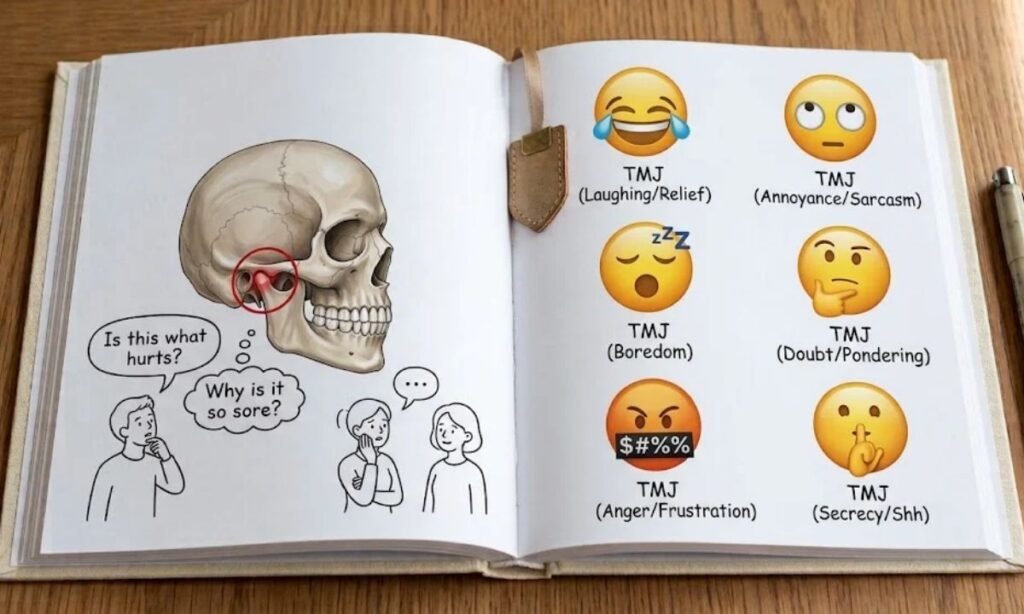
The TMJ meaning in text doesn’t change from chat to chat, but the right way to use it does. What feels natural with friends can sound out of place in a work message. Here’s how to read and use it in four common settings.
1. 📲 Social Media
Used in captions, comments, and stories. It often comes with humor, such as “TMJ gang, where you at?”
2. 🤝 Friends & Relationships
Friends use it to explain mood, appetite, or why they skipped something. Partners may use it to signal stress without a long conversation.
3. 💼 Work / Professional Settings
Keep it simple. “I have a jaw issue and a dentist appointment” works better than slang, especially in emails to managers or clients.
4. 🎭 Casual vs Serious Tone
- Casual: “TMJ is ruining my gum habit 😂”
- Serious: “My TMJ has been painful for weeks and I need to see a specialist.”
Context and emojis usually reveal which one it is.
⚠️ Common Misunderstandings
1. 🚫 TMJ Is a Disease
TMJ is a joint, not a disease. The problems affecting it are called TMD. Many cases are mild and temporary.
2. 🚫 Only Older People Get It
Not true. Teens, students, and young professionals deal with it too, often because of stress, grinding, or habits like nail or gum chewing.
3. 🚫 It’s Always Dental
Jaw pain can involve muscles, posture, stress, injury, or arthritis, not only teeth. A dentist is often the first stop, but not always the only one.
4. 🚫 Clicking = Serious Damage
Many people have jaw clicking with no pain and no problem. It’s worth checking only when it comes with pain, locking, or trouble opening your mouth.
📊 Comparison Table
| Term | Meaning | Where You’ll See It |
| TMJ | Temporomandibular joint (slang: jaw pain) | Texts, social media, health chats |
| TMD | Temporomandibular disorder (the actual condition) | Dental and medical notes |
| TM | Trademark / “talk to me” / “text me” | General texting |
| Tamo junto (TMJ) | “We’re together” (Portuguese) | Brazilian chats |
| Bruxism | Teeth grinding or clenching | Health talks, sleep discussions |
🔍 Variations / Types
Here are the common forms people refer to when they say “TMJ.”
1. 😤 Stress-Induced TMJ
Jaw tension from anxiety or pressure. It’s often the first thing people notice during busy or emotional periods.
2. 😴 Sleep Bruxism TMJ
Grinding or clenching at night. People wake up with a sore jaw or headaches.
3. 💻 Posture-Related TMJ
Slouching and a forward head position strain the neck and jaw. Long hours at a desk or on a phone can contribute.
4. 🤕 Injury-Based TMJ
Pain after a blow to the face, a fall, or a dental procedure. Healing time varies.
5. 🦴 Arthritis TMJ
Joint inflammation or wear affecting the jaw. This is more likely to be long-lasting and needs professional care.
6. 💿 Disc Displacement TMJ
The small cushioning disc in the joint slips out of its normal position. It often causes clicking or popping.
7. 🔒 Locking TMJ
The jaw sticks open or closed. This is more serious and worth getting checked promptly.
8. 🔊 Clicking/Popping TMJ
Sounds when opening or closing your mouth. If there’s no pain, it may be harmless.
9. ⏳ Chronic TMJ
Symptoms lasting months or longer. It usually calls for a proper evaluation and a long-term plan.
10. ⚡ Acute TMJ Flare-Up
A sudden, short-term spike triggered by stress, hard foods, or yawning wide. It often settles with rest and soft foods.
💬 How to Respond When Someone Uses It
When someone texts about their jaw, the TMJ meaning in text is usually the easy part. The harder part is choosing a reply that fits the moment.
😊 Casual Replies
- “Oh no, hope it eases up soon.”
- “Ouch, soft foods today!”
😂 Funny Replies
- “Time to put the bagel down 😅”
- “Your jaw filed a complaint.”
💪 Mature / Confident Replies
- “That sounds tough. Have you thought about seeing a dentist about it?”
- “Stress can do that. Want to talk about what’s going on?”
🤫 Private / Respectful Replies
- “Sorry you’re dealing with that. Let me know if you need anything.”
- “No pressure to talk, but I’m here.”
🌍 Regional & Cultural Usage
🇺🇸 Western Culture
TMJ is a familiar term, often tied to stress, grinding, and dental visits. It appears often in casual talk and wellness content.
🌏 Asian Culture
Many people simply say “jaw pain” or use local-language terms. English TMJ shows up mostly among younger, internet-active users.
🕌 Middle Eastern Culture
Usage is mainly medical or among English-speaking social circles. In casual chats, people tend to describe symptoms directly rather than use the abbreviation.
🌐 Global Internet Usage
Online, the term crosses borders through health videos and memes. Watch for the Portuguese “tamo junto,” since the same letters can mean something entirely different.
❓ FAQs
What does TMJ mean in text?
It usually means temporomandibular joint, used as slang for jaw pain or tension.
Is TMJ a slang word or a medical term?
It’s both. Medically it’s a joint, and in casual chat it’s shorthand for jaw problems.
What’s the difference between TMJ and TMD?
TMJ is the joint itself. TMD is the disorder affecting it.
Does TMJ mean anything else?
In Brazilian Portuguese chats, it can mean “tamo junto,” or “we’re together.”
Is TMJ serious?
Often it’s mild and temporary. Persistent pain, locking, or trouble chewing should be checked by a professional.
Can stress cause TMJ?
Yes. Stress often leads to clenching and grinding, which strain the jaw.
How should I reply if someone texts “TMJ”?
Respond with empathy first, then ask whether they need help or just wanted to vent.
Is it okay to use TMJ in a work message?
It’s better to say “jaw pain” or “dental appointment” in professional settings.
🏁 Conclusion
TMJ in text is simple once you know the context. Most of the time it means jaw pain or tension, often tied to stress, sleep, or habits. In Portuguese chats it can mean “tamo junto,” which is a very different message.
The best response is a kind one. A short, caring reply goes a long way, especially when the slang is hiding something more stressful. If jaw pain keeps coming back, see a dentist or doctor rather than relying on slang for answers.
This article is for general information and isn’t medical advice.
