

Ever gotten a text ending in 💙 and paused to wonder what it really means? You’re not alone. Unlike the red heart, which shouts romance, the blue heart is quieter, cooler, and way more flexible which is exactly why it confuses people.
In this guide, you’ll learn what the blue heart emoji means in texting, how it differs when sent by a girl vs a guy, whether it’s romantic or platonic, and when you should (or shouldn’t) use it yourself.
What Does Blue Hearts Mean in Text?
At its core, the 💙 blue heart represents trust, loyalty, calm, and platonic affection. It’s one of the least “loaded” heart emojis :soft enough for a crush, safe enough for a coworker.
Because blue is associated with clarity, peace, and stability, the blue heart usually signals a steady kind of care rather than intense passion. Think “I’ve got your back” energy, not “I’m obsessed with you” energy.
Blue Hearts Mean in Text From Girl
When a girl sends a blue heart, it typically means friendship, support, or genuine appreciation. It’s her way of saying “I care about you” without adding romantic pressure. Many girls use 💙 with close friends, sisters, or someone they see strictly as a platonic connection.
Blue Hearts Mean in Text From a Guy
From a guy, the blue heart often carries the same platonic weight :loyalty, respect, or “bro love.” Guys frequently use it in group chats or with close friends as a low-key way to show support without seeming overly emotional.
Blue Heart Meaning in Relationship
In a romantic relationship, a blue heart can still work — but it usually signals a calmer, more comforting kind of love rather than fiery passion. Partners might send 💙 to say “I trust you,” “I’m here for you,” or simply to add variety to their usual ❤ ️.
Blue Hearts Mean in Text From a Boy
If it’s coming from a younger sender (like a teen texting a friend), the blue heart is almost always platonic. It’s commonly used in school group chats, gaming communities, and casual texts to express friendship or good vibes :nothing more.
Where Are Blue Hearts Commonly Used?
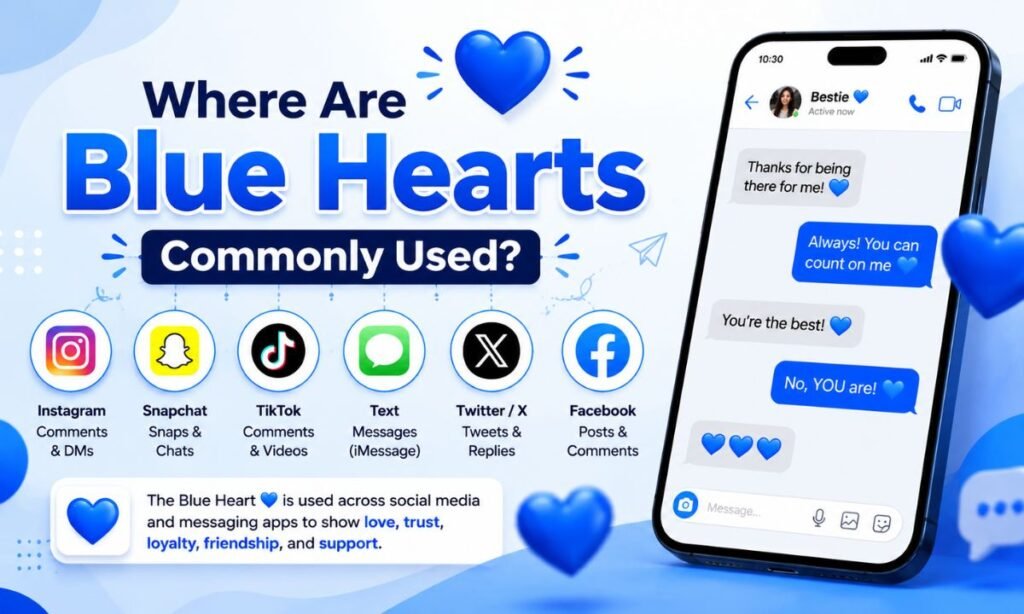
The blue heart shows up everywhere online, but its tone shifts slightly depending on the platform.
Popular Platforms
| Platform | Common Use of 💙 |
| Aesthetic captions, comments, showing support for posts | |
| Casual affection between friends or family | |
| TikTok | Calm, trustworthy vibe; often paired with relatable content |
| Twitter/X | Team spirit, brand shoutouts, awareness campaigns |
| Text messages (SMS) | Friendly check-ins, thank-you notes, comfort |
Tone & Style
The blue heart’s tone is generally friendly, calm, and low-pressure. It rarely feels flirty on its own, which is why it’s a safe pick for group chats, coworkers, and new friendships where you don’t want to send the wrong signal. 🙂
Examples of Blue Heart in Conversation
Here’s how 💙 naturally fits into real texts:
- “Thank you for always listening to me 💙”
- “Go Team Blue! We’re all rooting for you today 💙”
- “Missing our coffee dates, let’s catch up soon 💙”
- “You’ve got this. I believe in you 💙”
- “Happy to support #AutismAwareness this month 💙”
Notice how none of these examples feel romantic :they lean toward gratitude, encouragement, and calm support.
When to Use and When Not to Use Blue Hearts
When to Use Blue Heart ✅
- Thanking a friend or family member
- Showing support for a cause, team, or brand
- Comforting someone going through a hard time
- Keeping a group chat warm and friendly
- Adding a safe, work-appropriate touch to a message
When Not to Use Blue Heart ❌
- When you want to clearly express romantic interest (use ❤️ instead)
- In a serious, formal, or professional email
- Right after an argument, where it might feel dismissive
- When the context calls for a stronger emotional tone (grief, deep love, urgency)
Other Meanings of Blue Hearts
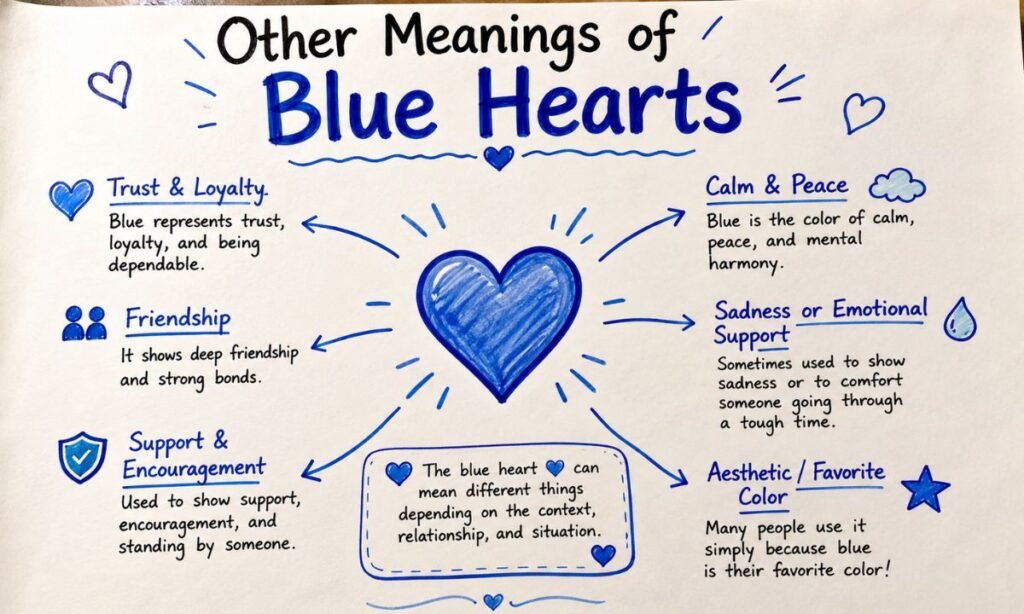
Beyond everyday texting, the blue heart carries a few extra layers of meaning depending on context.
| Context | Example Phrase | Why It Works |
| Autism awareness | “Wearing blue today 💙 #AutismAwareness” | Blue is the recognized color for autism advocacy |
| Sports fandom | “Let’s go Blues! 💙” | Matches team colors, shows loyalty |
| Sadness or “feeling blue” | “Rough day today 💙” | Softly signals a subdued mood |
| Water/vacation themes | “Beach day vibes 💙🌊” | Blue evokes ocean and calm |
| Brand loyalty | “Obsessed with this brand 💙” | Ties affection to a blue-branded company |
Similar Emojis or Alternatives
If 💙 doesn’t quite fit your message, here are close alternatives and how they differ:
| Emoji/Slang | Meaning | When to Use |
| ❤️ Red Heart | Deep romantic love | Strong, direct romantic feelings |
| 🩵 Light Blue Heart | Sincerity, calm affection | Gentle romantic or close friendship |
| 💚 Green Heart | Growth, nature, sometimes jealousy in slang | Supportive or eco-related content |
| 💜 Purple Heart | Compassion, sometimes deep loyalty | Close friendships, fandoms |
| 🤍 White Heart | Purity, new beginnings | Fresh starts, minimal aesthetics |
| 🧡 Orange Heart | Warmth, friendship | Casual, upbeat friendships |
Why People Use Blue Hearts in Texting
Shows Trust and Loyalty 🤝
Blue is psychologically tied to reliability, which is why the heart naturally reads as “I trust you” or “I’m loyal to you.”
Works for Friends and Family 👨👩👧
It’s affectionate without being romantic, making it perfect for parents, siblings, and close friends.
Casual & Relatable 😌
The blue heart feels laid-back — great for everyday chats that don’t need heavy emotional weight.
Social Media-Friendly 📱
Its neutral vibe makes it popular for captions, comments, and brand posts across platforms.
Flexible Tone 🎭
From comforting to celebratory, 💙 adapts to almost any context without feeling out of place.
Is the Blue Heart Romantic or Platonic?
The honest answer: it depends on who’s sending it and the conversation’s history. Here’s a quick breakdown.
Friendly
Most commonly, 💙 is platonic :used between friends, siblings, and acquaintances to show warmth and support.
Neutral
In group chats or casual replies, the blue heart often carries no deeper meaning at all :it’s just a friendly sign-off.
Light Romantic
In an established relationship, or paired with flirty text, 💙 can carry a soft romantic tone :more “comfort and trust” than “passion.”
Frequently Asked Questions
Does a blue heart mean someone likes you?
Not necessarily. It usually signals friendship, trust, or support rather than romantic interest.
Is a blue heart better than a red heart for a crush?
No :if you want to express romantic feelings clearly, the red heart is the stronger, more direct choice.
Can a blue heart be used between coworkers?
Yes, it’s considered safe and professional-friendly, often used to show appreciation or support at work.
Why do people use blue hearts on social media?
They’re popular for showing brand loyalty, team spirit, or support for causes like autism awareness.
What’s the difference between blue heart and light blue heart?
The blue heart is more platonic and trust-focused, while the light blue heart leans slightly more affectionate and sincere.
Should I reply to a blue heart with another emoji?
Mirroring the sender’s tone works well with a blue heart back, or a friendly emoji that matches the vibe of the conversation.
Final Thoughts
The blue heart 💙 is one of the most versatile emojis in texting calm, trustworthy, and rarely misread as overly romantic. Whether it’s from a friend, family member, or partner, it usually means someone values you, trusts you, or simply wants to send good vibes your way.
When in doubt, look at the context of the conversation rather than the emoji alone that’s always the real key to understanding what someone means. 💙
