

You ask a simple question in a group chat. One reply comes back: “IDTS.” No explanation, no emoji, nothing else.
If you froze for a second, you are not alone. IDTS meaning in chat is a common search because the abbreviation is short, casual, and easy to misread.
This guide explains what it stands for, where it came from, how people use it, and when you should skip it.
💬 What Does IDTS Mean in Chat – Quick Definition
IDTS stands for “I don’t think so.” People use it in texts, DMs, and comments to show doubt or mild disagreement without writing a full sentence.
🔍 Simple breakdown:
- I = the person speaking
- DT = don’t think
- S = so
Put together, it reads as a soft “no” or a “probably not.”
✍️ Example sentences:
- “Is Maya coming tonight?” → “IDTS, she has an early shift.”
- “Will this update fix the lag?” → “idts, but let’s test it.”
- “Think he’ll reply today?” → “IDTS 😅”
⚡ Quick Facts
| Feature | Detail |
| Full form | I don’t think so |
| Type | Texting abbreviation / internet slang |
| Tone | Casual, usually mild |
| Common spelling | idts (lowercase is normal) |
| Best for | Friends, DMs, group chats, comments |
| Avoid in | Formal emails, reports, client messages |
📜 Origin & Background
No one can point to a single inventor of IDTS. Like most chat shorthand, it most likely grew out of early chat rooms and instant messaging, where typing fast mattered more than perfect grammar.
Smartphones and social apps then pushed it further. Short replies suit quick scrolling, so abbreviations such as IDK, IMO, and IDT became everyday habits. IDTS simply adds the “so” to IDT (“I don’t think”) to finish the thought.
Gamers also use it as a playful, almost movie-style taunt. Someone blocks your shot or wins a fight and types “IDTS” as if to say, “Not today.”
📱 Real-Life Conversations (How People Actually Use It)

1. 💚 WhatsApp Chat
Friend: Do you think the match will start on time?
You: IDTS, last time they were 30 minutes late.
In WhatsApp groups, IDTS works as a quick, honest answer that keeps the chat moving.
2. 📸 Instagram DM
Friend: Should I post this selfie? Everyone will love it, right?
You: idts 😂 the lighting is rough, retake it.
Here the emoji turns a blunt answer into friendly teasing.
3. 🎵 TikTok Comments
Creator: Think this trend will still be around next month?
Commenter: IDTS, it’s already fading.
In comment sections, IDTS often signals a mild challenge to what the video claims.
4. ✉️ Text Message
Mom: Can your brother pick up the groceries?
You: IDTS. He’s at work till 8.
A one-word answer plus a short reason is the most natural pattern.
🧠 Emotional & Psychological Meaning
IDTS looks neutral, but it carries a little emotional weight. People often pick it because it feels softer than a flat “No.” It lets them disagree without starting an argument.
Because text has no voice or facial expression, readers fill in the tone themselves. That is why the same three letters can feel calm to one person and cold to another.
🎯 What it often signals:
- Doubt, but not total certainty
- A wish to avoid conflict
- A relaxed, casual mood
- Light sarcasm when paired with 😂 or 🙄
- A short, “I’m busy” energy when sent alone
🌐 Usage in Different Contexts
1. 📲 Social Media
On Instagram, TikTok, X, and Reddit, IDTS appears in replies and comments. It is quick, public, and usually light-hearted.
Example: A creator posts, “This filter makes me look ten years younger.” A commenter replies, “idts 😂 it’s just a blur.”
2. 👫 Friends & Relationships
With friends, it feels natural. With a partner, context matters. “IDTS, I’m tired tonight” sounds honest, while a bare “idts” in the middle of a serious talk can feel dismissive.
Example (friends): “Can we finish the project tonight?” → “idts, I’m exhausted 😅”
Example (partner): “Want to go out again?” → “IDTS, I’m so tired. Tomorrow?”
3. 💼 Work or Professional Settings
IDTS is fine in a relaxed team chat between close coworkers. In emails, client messages, or messages to a manager, write “I don’t think so” or “I’m not sure that will work.”
Example (team chat): “Will the client approve this by Friday?” → “idts, they usually take a week.”
Example (formal version): “I don’t think so. They usually take a week to respond.”
4. ⚖️ Casual vs Serious Tone
| Situation | Does IDTS fit? | Better choice if not |
| Joking with friends | ✅ Yes | — |
| Group chat plans | ✅ Yes | — |
| Disagreeing with a teacher | ❌ No | “I don’t think that’s correct.” |
| Client email | ❌ No | “I’m not sure that’s feasible.” |
| Serious personal talk | ⚠️ Risky | A full, kind sentence |
Casual example: “Pizza again tonight?” → “idts 😂 we had it yesterday.”
Serious example: “Do you think the loan will be approved?” → “I don’t think so, but let’s check with the bank.” A full sentence feels more respectful here.
🏢 Other Meanings of IDTS (Outside Chat)
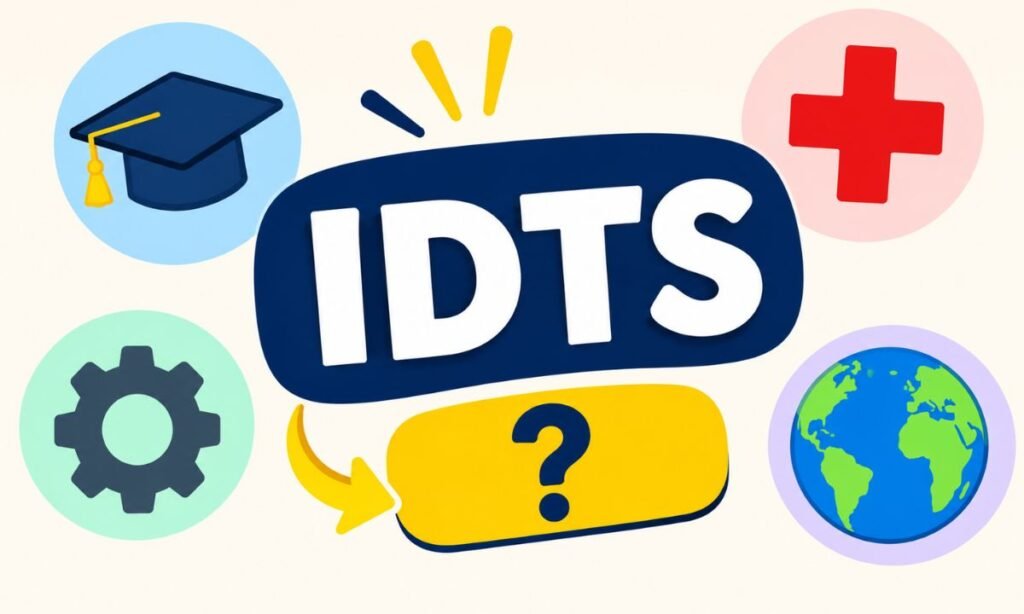
In chat, IDTS almost always means “I don’t think so.” Outside chat, acronyms like this can mean very different things depending on the field. Always check the surrounding text before assuming.
💼 IDTS Meaning in Business
There is no single, widely accepted business meaning of IDTS. Companies often create their own internal abbreviations, so it may stand for a system, team, or process name specific to that organization.
Acronym directories list a few possibilities, such as International Development Targets (business and economics) or Instrumentation Data Transmission System (technology). Treat these as examples, not rules. If you see IDTS in a work document, check the glossary or ask the sender.
🏥 IDTS Meaning in Medical
In healthcare, IDTS commonly refers to the Infectious Diseases Transition Service. It describes a multidisciplinary team, often including physicians, pharmacists, nurses, and patient service staff, that supports patients as they move from hospital care to the next stage of treatment.
If you see it in a medical record or hospital document, this is the likely meaning. It has nothing to do with texting.
😬 Is “IDTS” Rude, Flirty, or Offensive?
Short answer: it is not offensive and not flirty by default. It is just brief. Tone depends on what surrounds it.
When It Feels Neutral
When it answers a factual question or guess, such as “IDTS, the store closes at 6.” Nothing emotional is attached.
When It Can Feel Slightly Rude
When it replies to something heartfelt or serious with no explanation. A lone “IDTS” after someone shares an idea can feel like a door closing.
When It Sounds Friendly
When you add an emoji, a reason, or a joke. “idts 😂 but I’ll still come” feels warm.
When It Could Be Misinterpreted
When the other person is stressed, upset, or in a different culture of texting. They may read doubt as rejection. Some may even read a lowercase “idts” as sarcasm.
It is rarely flirty. In flirty chats, IDTS usually appears as playful teasing, such as “You’ll beat me at chess? IDTS 😏.”
🚫 When You Should Avoid Using “IDTS”
Professional Settings
Avoid it in emails, job applications, client chats, and any message to a boss. It looks unpolished.
Cross-Cultural Conversations
Non-native English speakers may not know the abbreviation. Spelling it out prevents confusion and keeps the message respectful.
Sensitive Situations
Skip it when someone is sharing bad news, asking for help, or discussing feelings. A full sentence shows you care.
❌ Common Misunderstandings about IDTS

1. Thinking It Means “I Don’t Know”
This is the top mix-up. “I don’t know” is IDK. IDTS means you have a view and it leans toward “no.”
2. Assuming It’s Always Rude
Most of the time it is just quick typing. Judge the tone from the emoji, the topic, and the relationship.
3. Using It in Sensitive Situations
Sending IDTS to someone who is hurting can come across as cold, even when you did not mean it.
4. Misreading Tone
Text hides voice. Before reacting, reread the full message and consider how well you know the sender.
📊 Comparison Table
| Abbreviation | Full Form | Meaning | Certainty Level |
| IDTS | I don’t think so | Doubt leaning to “no” | Medium |
| IDT | I don’t think | Shorter doubt, sentence continues | Medium |
| IDK | I don’t know | No answer or no knowledge | Low |
| IMO | In my opinion | Sharing a view | Varies |
| IB2D | I beg to differ | Polite, firm disagreement | High |
| NO | No | Direct refusal | Very high |
🔀 Variations / Types of IDTS
- idts (lowercase): the most common, relaxed form
- IDTS (caps): a bit more emphatic
- idts lol / idts 😂: playful, softer tone
- idts tbh: honest, slightly blunt
- idts but…: leaves room for being wrong
- IDTS. (with a period): can sound firm or final
- IDTS! (exclamation): can read as “no way!”
💡 How to Respond When Someone Uses IDTS
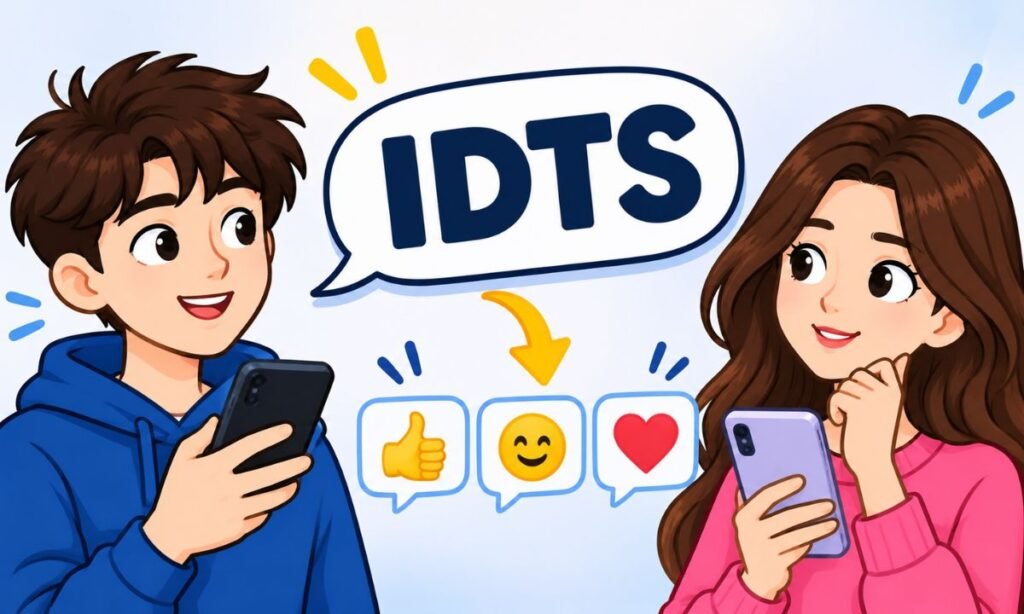
😎 Casual Replies
- “Fair enough.”
- “Okay, what makes you say that?”
- “Got it, thanks for telling me.”
😂 Funny Replies
- “Ouch, straight to the heart 😭”
- “IDTS? Rude, but accepted 😂”
- “Bold of you to doubt me.”
🧘 Mature / Confident Replies
- “Okay, I see it differently, but I hear you.”
- “Can you share why? I’m open to it.”
- “Thanks for being honest.”
🤝 Private / Respectful Replies
- “Can we talk about it later?”
- “I’ll message you privately about this.”
- “No worries. Let’s keep it simple.”
🗺️ Regional & Cultural Usage
IDTS is English slang, so its reach depends on how comfortable people are with English chat shorthand.
🇺🇸 Western Culture
In the US, UK, Canada, and Australia, it fits casual texting and social media, especially among younger users. Most people read it as a mild, quick “no.”
🌏 Asian Culture
In many Asian countries, English abbreviations spread through gaming, K-pop fandoms, and social apps. Users who prefer indirect communication may find a bare IDTS too blunt, so they often soften it with an emoji.
🕌 Middle Eastern Culture
In many Arabic-speaking regions, people mix English slang with local languages in chats. Politeness matters, so a softer phrase often feels more respectful when speaking to elders or in formal situations.
🌐 Global Internet Usage
On Reddit, Discord, TikTok, and gaming chats, IDTS travels easily because it is short and clear in context. Still, it is wise to spell it out when chatting with someone new.
❓ Frequently Asked Questions
What does IDTS mean in chat?
It means “I don’t think so.” People use it to show doubt or gentle disagreement.
Is IDTS the same as IDK?
No. IDK means “I don’t know,” while IDTS means you think the answer is probably no.
Is IDTS rude?
Not by itself. It can feel curt if sent alone in a serious or emotional conversation.
Can I use IDTS in a work email?
It is best avoided. Write “I don’t think so” or a more polished alternative.
What is a polite alternative to IDTS?
Try “I’m not sure that’s right” or “I don’t think that will work.”
Does IDTS have a medical meaning?
Yes. In healthcare, it can refer to the Infectious Diseases Transition Service, a patient-support team.
Should I use capital or small letters?
Both work. Lowercase feels casual, while capitals feel more emphatic.
✅ Conclusion
IDTS is a simple abbreviation for “I don’t think so,” and it is mostly harmless. Its tone depends on the people, the topic, and the extra cues around it, like emojis or a quick reason.
Use it with friends and in relaxed chats. Spell it out in professional, cross-cultural, or sensitive moments.
And if you see it outside a chat, check the context first, because in business or healthcare it may mean something entirely different.
